
A professional website for a New Jersey small business usually costs somewhere between a few thousand dollars and the low tens of thousands. Where your project lands depends on who builds it, how many pages and features you need, and whether content, SEO and ongoing care are included. This guide breaks the price down so you can compare quotes properly and avoid paying twice.
How much does a website cost in New Jersey?
For most local service businesses, a professionally built website falls into a mid-range bracket: more than a do-it-yourself builder, far less than an enterprise platform. National survey data gives a useful reference point. WebFX surveyed 250 US marketing professionals and reports that web design costs $1,000 to $30,000+ on average in 2026, with a basic small business website typically costing $6,500 to $15,000 (WebFX web design pricing). New Jersey prices sit within the same national range; what moves a quote up or down is scope, not the zip code.
The useful question is not “what is the average?” but “what do I need for my business to win enquiries?” A landscaper who needs eight service pages and a quote form needs a very different build from a clinic that needs online booking or a store that ships nationwide.
What are the main ways to get a website built?
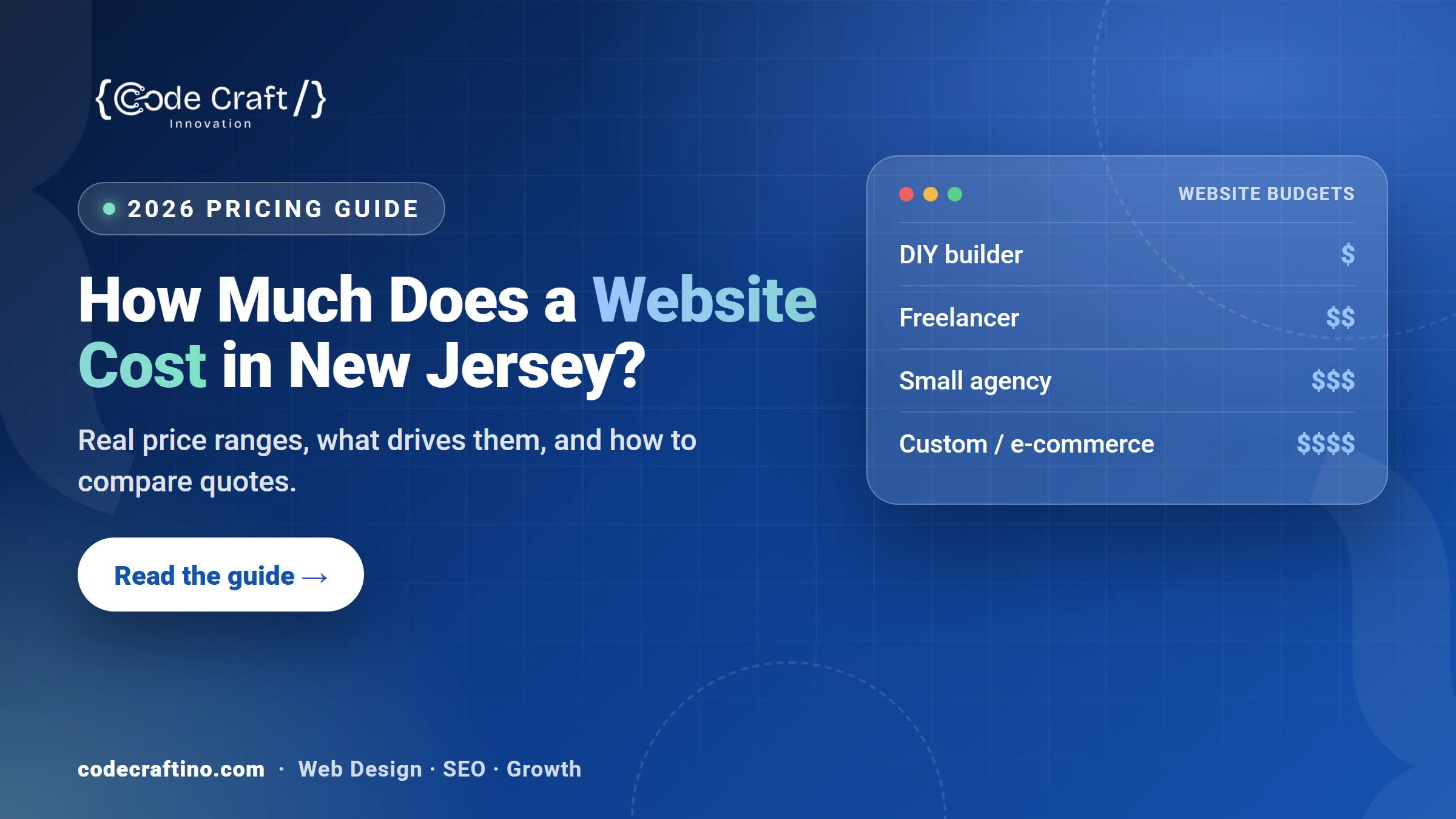
Most New Jersey businesses choose one of four routes. Each has a different price shape and a different hidden cost.
| Option | Upfront cost | Best for | Hidden cost to watch |
|---|---|---|---|
| DIY builder (Wix, Squarespace) | Lowest: a monthly plan | Very new businesses testing an idea | Your own time, and a site that rarely ranks for competitive local searches |
| Freelancer | Low to moderate | Simple brochure sites with ready content | Availability, handover and who fixes it when something breaks |
| Small agency | Moderate | Service businesses that need leads from Google | Retainers you did not ask for, or a site you do not fully own |
| Custom build / e-commerce | Highest | Online stores, booking systems, integrations | Ongoing development and hosting at scale |
If you are weighing platforms as well as builders, our comparisons of Wix vs WordPress and WordPress vs Shopify explain how the platform choice affects long-term cost.
What actually drives the price of a website?
Two quotes for “a website” can differ by thousands because they describe different projects. These are the factors that change the number most:
- Number of unique pages and templates. A five-page site and a site with a page for every service and every town you serve are different builds. Each extra template adds design and build time.
- Custom design vs a theme. A pre-made theme is cheaper to start; a custom design costs more but fits your brand and is easier to keep fast.
- Content. Writing service pages, sourcing photos and producing copy that ranks is real work. Ask whether it is included or expected from you.
- Features. Online booking, payments, quote calculators, member areas and CRM connections each add scope.
- E-commerce. Product setup, shipping rules, tax and payment testing make online stores the most variable category.
- SEO foundations. Proper page structure, local pages, schema markup and Google Business Profile alignment are what let a new site actually appear in local searches.
- Speed and accessibility. Building for fast mobile loading and accessible markup takes care at the start and is expensive to retrofit later.
What does a website cost after launch?
The build is only part of the cost. Budget for the following every year so the site stays secure and keeps bringing in work:
- Domain name renewal.
- Hosting, from basic shared plans to managed hosting for busier sites.
- Maintenance: software and plugin updates, backups, security monitoring and small edits. Our guide to WordPress maintenance covers what is worth paying for.
- Content and SEO: new pages, articles and local optimization if you want rankings to keep improving.
- Licences for premium plugins, fonts or booking tools.
A cheap build with expensive or unclear ongoing fees often costs more over three years than a fairly priced build you fully own.
How long does it take, and does speed change the price?
Most small business sites take four to eight weeks, and rushed timelines usually cost more because work has to be compressed. The biggest delays are content and feedback, not the build. See how long it takes to build a business website for a stage-by-stage timeline.
How do you compare website quotes fairly?
Put every quote side by side and check that each one answers the same questions. If a quote is vague, ask for it in writing before you compare prices.
- Is the quote fixed or hourly? A fixed, written scope protects you from surprise invoices.
- Exactly which pages and features are included? Ask for a page list.
- Who writes the content? If it is you, factor in your time.
- Is basic SEO included? Titles, descriptions, page structure, local pages and schema should not be optional extras.
- Do you own the website, domain and accounts? You should hold the logins to your domain, hosting, Google Analytics and Google Business Profile.
- What happens after launch? Get maintenance and support terms in writing.
- Who does the work? Know whether the person scoping the project is the one building it.
Our checklist of questions to ask a New Jersey web design agency goes deeper on each point.
When is a cheaper website the right choice?
A low-cost or DIY site is reasonable if you are validating a new idea, do not rely on Google for customers yet, or simply need an online business card. It becomes a false economy once your business depends on people finding you for searches like “web design near me” or “plumber in Newark”, because those searches are competitive and reward well-structured, fast, locally relevant sites.
When is it worth investing more?
Spending more makes sense when each new customer is worth a lot to you, when you serve several towns and need a page for each, when you sell online, or when your current site is costing you enquiries. If you are not sure whether to rebuild, read the signs your website needs a redesign and our website redesign checklist.
How does Code Craft Innovations price a website?
We do not publish a one-size price because two businesses rarely need the same site. Instead, every project starts with a free consultation and ends with a fixed written quote: an agreed page list, features, timeline and price, with no hourly billing and no hidden fees. You own the finished website, the code and every account. We build on WordPress, Shopify and Wix Studio, and local SEO is built in from the first page.
We work with businesses across New Jersey, including Newark, Jersey City, Paterson and Princeton. Tell us what you want the site to achieve and we will send a written quote. Request your free quote.
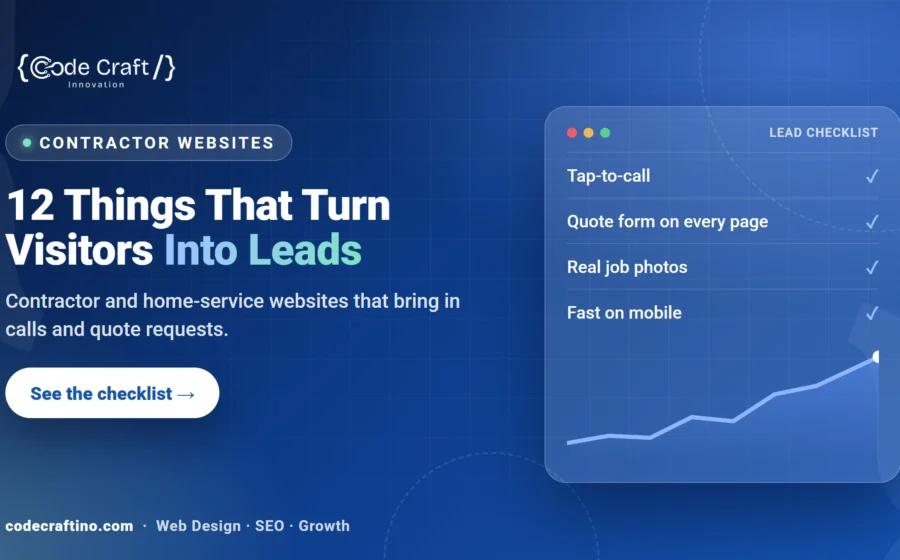
Running a trades or home-service business? See the 12 things a contractor website needs to bring in leads.
Frequently asked questions
What is a realistic budget for a small business website in New Jersey?
For a professionally built service-business site, plan for a mid-range budget rather than the cheapest option. National survey data puts a basic small business website at roughly $6,500 to $15,000 (WebFX, 2026); simpler sites with ready content can cost less, and stores or custom features cost more.
Is it cheaper to hire a freelancer or an agency?
A freelancer is usually cheaper upfront. An agency costs more but typically covers design, development, content support, SEO and ongoing care in one place, which can cost less over the life of the site.
Do I have to pay monthly for a website?
You will always pay for a domain and hosting. Maintenance and SEO are optional but recommended. Avoid contracts that make you rent a site you never own.
Why do website quotes vary so much?
Because they describe different projects. Page count, custom design, content writing, features, e-commerce and SEO are the biggest variables. Compare quotes using the same page list and the same inclusions.
How can I avoid surprise costs?
Ask for a fixed written scope, confirm who owns the site and accounts, and get post-launch support terms in writing before you sign.




Share your thoughts