
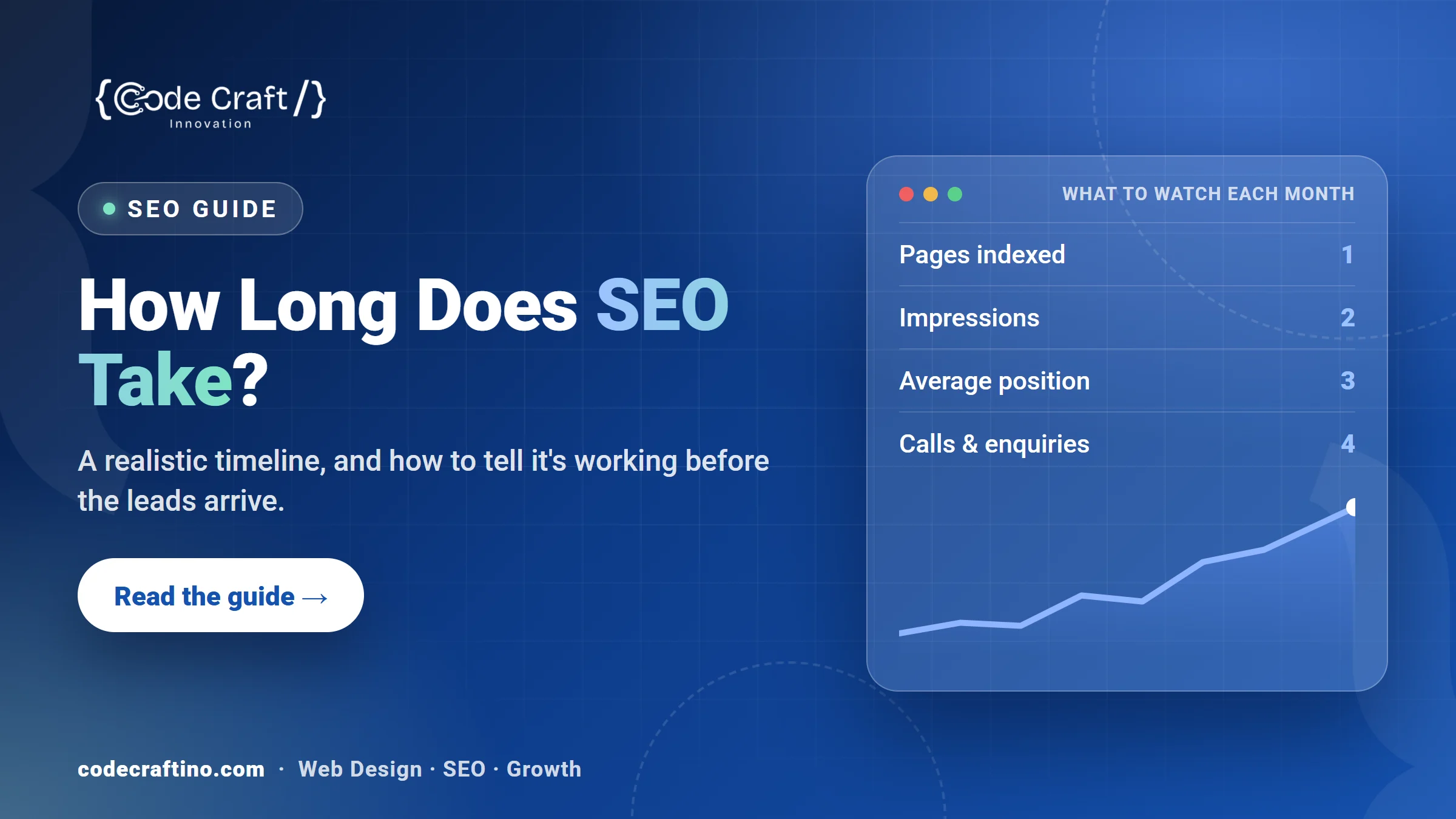
SEO usually takes months, not weeks. In our experience, Google Business Profile improvements often show movement in the map results within 4 to 12 weeks, new content starts to appear for its searches within 2 to 4 months, and competitive rankings across a whole service area typically take 6 to 12 months. Google itself says some changes take effect in hours while others take several months. This guide explains what happens in each phase, what speeds SEO up or slows it down, and how to tell whether it’s working before the leads arrive.
Why does SEO take so long?
Three things have to happen before a page brings you customers: Google has to find and crawl it, decide it deserves to rank, and then searchers have to choose it over the other results.
The first step alone isn’t instant. Google says crawling “can take anywhere from a few days to a few weeks,” and requesting a crawl doesn’t guarantee a page will be included in results at all (Google Search Central). After that, rankings are earned against competitors who’ve often been building their pages, reviews and links for years.
The data shows how slow it can be for new content. In an Ahrefs study published in May 2025, only 1.74% of newly published pages reached Google’s top 10 within a year, and the average page ranking first was 5 years old (Ahrefs). That sample covered pages of every kind; focused local pages for a real business usually do better, but the lesson stands: SEO compounds over time.
What happens in the first month?
The first month is about foundations. Expect an audit of your website, Google Business Profile and competitors, then fixes for anything that stops pages from being crawled or indexed: broken pages, missing titles, slow mobile pages, duplicate content and tracking gaps. Calls and form submissions should be tracked from day one, so you can measure what follows.
You may see small changes this early, such as pages appearing in Search Console or the business profile getting more views, but leads rarely change in month one.
What should you see in months two to four?
This is when improved and new pages start to earn impressions. Service pages, location pages and helpful guides begin to show up for longer, more specific searches, often on the second or third page of results at first. Impressions usually rise before clicks do.
For local businesses, the map results often move first. A complete Google Business Profile, steady reviews and accurate listings can show movement within weeks. Our guide to getting into Google’s local map results covers what matters most.
Google’s advice on judging changes is to be patient: “you likely want to wait a few weeks to assess whether your work had beneficial effects in Google Search results” (Google SEO Starter Guide).
When does SEO start bringing leads?
In our experience, for most small businesses, enquiries from organic search build from around the four to six month mark, and keep growing as more pages reach the first page. Competitive terms, such as a service plus a large city, usually take six to twelve months or longer.
The timeline is shorter when you already have some authority, such as an established domain, reviews and a few pages that rank. It’s longer for a brand-new website, a crowded market, or a site with technical problems that have to be fixed first.
What makes SEO faster or slower?
| Speeds it up | Slows it down |
|---|---|
| An existing site with some history and reviews | A brand-new domain with no links or reviews |
| A separate page for each service and area you cover | One general services page for everything |
| Fast, mobile-friendly pages | Slow pages and technical errors |
| A steady flow of new reviews | Few or old reviews |
| Specific, less competitive searches first | Only targeting the most competitive phrases |
| Consistent monthly work | Starting and stopping |
If your pages aren’t showing up at all, start with our checklist on why a website isn’t showing up on Google before you think about rankings.
Does a new website take longer to rank?
Usually, yes. A new domain has no history, no reviews linked to it and no other sites pointing to it, so Google has less to go on. Launching with a clear page for each service, a working Google Business Profile, fast pages and tracking in place gives it the best start. If you’re replacing an old site, keep the old URLs or redirect each one to its new page, so the rankings you’ve already earned carry over instead of starting again.
How do you know SEO is working before the leads arrive?
Look at leading indicators each month, in this order:
- Indexing: more of your important pages are indexed in Google Search Console.
- Impressions: your pages appear for more searches, even on page two or three.
- Average position: key pages move up for the searches that matter.
- Map activity: more calls, website clicks and direction requests from your Google Business Profile.
- Clicks and enquiries: organic visits, calls and form submissions, tracked to the page they came from.
A good monthly report shows all five, and explains what was done and what comes next. Rankings without enquiries aren’t the goal.
Is it worth waiting for SEO?
For most local service businesses, yes, because the results compound: a page that ranks keeps bringing enquiries without paying for each click. If you need leads this month, paid search can fill the gap while SEO builds; our comparison of PPC vs SEO explains when each makes sense. For budgets, see how much SEO costs in New Jersey.
Be wary of anyone who promises fast rankings. Google suggests asking an SEO provider: “What kind of results do you expect to see, and in what timeframe? How do you measure your success?” (Google Search Central). Our guide on how to choose an SEO company in New Jersey lists more questions to ask.
SEO for New Jersey businesses
Code Craft Innovations runs SEO and PPC for businesses across New Jersey, including Fairfield and Paterson. We start with a free review of your website, Google Business Profile and competitors, then send a written plan with fixed monthly deliverables. Tell us about your business and you’ll get a fixed written quote within 24 hours.
Frequently asked questions
How long does SEO take for a small business?
In our experience, early movement often shows within 4 to 12 weeks in the map results and 2 to 4 months for new content, with steady leads building over 4 to 12 months. Competition, your site’s history and how consistently the work is done all change the timeline.
How long does local SEO take?
Local SEO is often the fastest part. Improvements to your Google Business Profile, reviews and listings can show movement within weeks, while ranking in the map results for competitive searches can take several months.
Can SEO work in one month?
Fixes to serious technical problems can help quickly, and some changes take effect in hours. Lasting rankings and steady leads almost always take longer.
Why are my impressions going up but not my clicks?
That’s normal in the early months. Your pages are appearing in more searches, but often below the first page. Clicks follow as those pages move up.
Should I stop SEO if I don’t see results in three months?
Not if your indexing, impressions and positions are improving. Do review it if nothing has moved by then, and ask your provider for the specific work done and the data behind it.





Share your thoughts